How Clothing Consumption and Disposal Impacts our Waste Stream
R
Ryan Klein | Director of Operations @ EkoLinq
Consumer waste has been on a steady rise for the last fifty years across every product type. One product in particular has seen a sharp rise in disposal rates: textiles. Whether it is free two-day shipping or personalized ads on social media, consuming has never been easier.
This shift is not merely a matter of individual choice, but the result of structural changes in how goods are designed, marketed, and distributed. Shortened product lifespans, planned obsolescence, and rapidly changing trends have normalized frequent replacement rather than repair or reuse. At the same time, globalized supply chains and declining production costs have obscured the environmental consequences of consumption, separating consumers from the material realities of disposal. As a result, waste generation has become an externalized byproduct of modern convenience, accumulating quietly while remaining largely invisible within everyday purchasing decisions.
The Crisis By The Numbers
36%
less time wearing clothes before discarding.
Ellen MacArthur Foundation, 2017
<1%
of clothing is recycled globally.
Boston Consulting Group, 2025
We have been conditioned to equate speed with service, treating immediacy as a marker of efficiency rather than excess. The “snap of a finger” convenience enjoyed at the point of purchase conceals a much slower and more enduring aftermath in landfills and waste streams. We are no longer simply purchasing goods; we are creating deferred costs associated with their eventual disposal. Because waste is quickly removed from households and communities , its persistence is easily overlooked. Yet driven by the acceleration of fast fashion and the declining costs of consumer electronics, the culture of constant upgrading is placing an unprecedented and compounding burden on our waste management systems.
The Environmental Impact of Our Waste
The environmental impact of consumer waste begins long before a product reaches a landfill. The production of new textiles requires vast amounts of water, energy, and raw materials. For instance, creating a single cotton shirt can require approximately 700 gallons of water (World Wildlife Fund [WWF], 2019). When these items are discarded after only a few uses, the massive environmental investment required to create them is effectively squandered.
$150 billion
lost globally due to the failure to properly recycle recoverable raw textile materials.
Boston Consulting Group, 2025
By treating textiles as disposable, we are fueling a continuous cycle of resource depletion. Every pair of socks or sweater sent to a landfill necessitates the extraction of more virgin materials, further straining our planet's finite ecosystems.
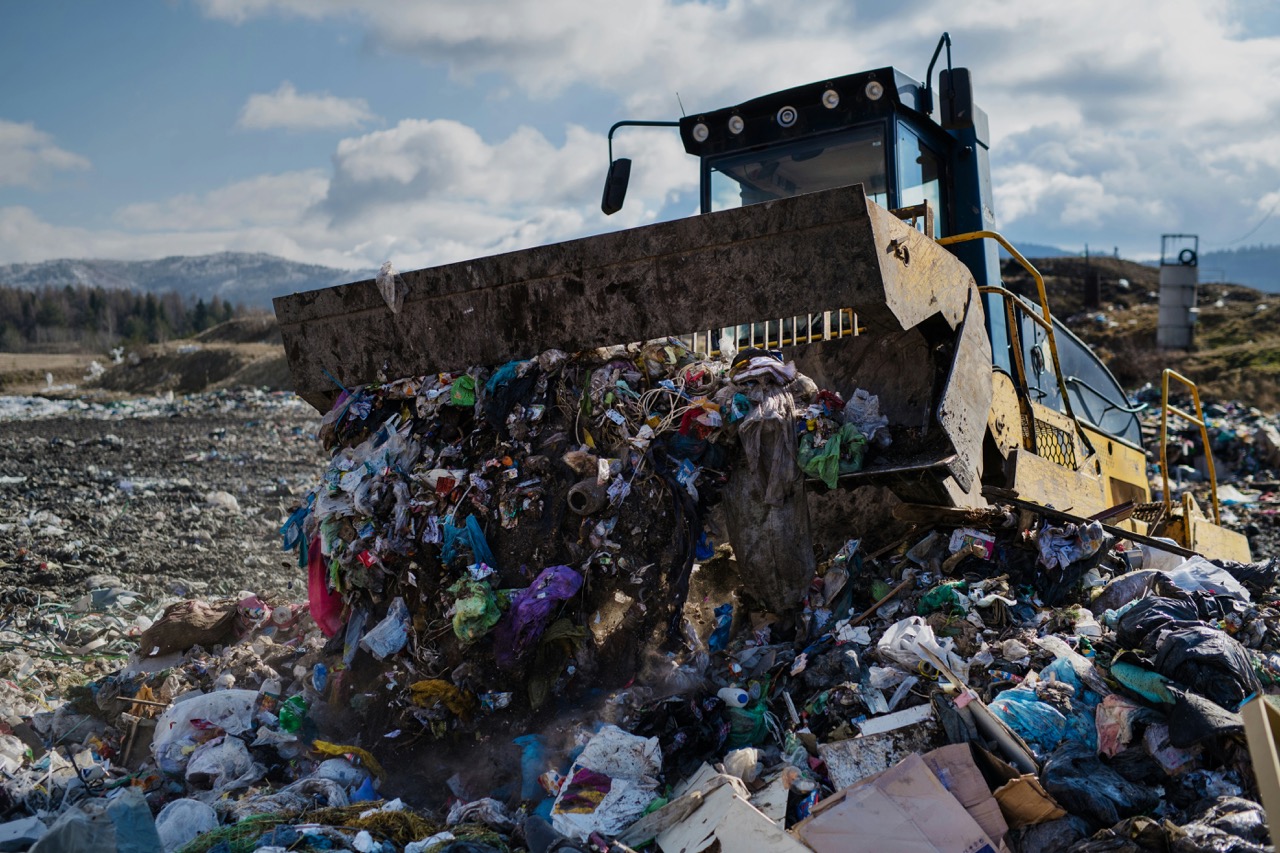
Once these materials reach the landfill, the problem shifts from resource depletion to active environmental degradation and physical harm. Textiles can take decades to decompose, during which they release methane. This greenhouse gas is 28 times more potent than carbon dioxide (Environmental Protection Agency [EPA], 2021). Furthermore, toxic dyes and chemicals used during manufacturing can leach into the soil and waterways when textiles are improperly disposed of, adversely affecting ecosystems and human health (Greenpeace, 2018).
Methane—the gas released as textiles decompose—is 28 times more potent than carbon dioxide. EPA, 2021
Capping the pyramid of unsustainability, our societal structure assumes that our landfills have infinite capacity, but they don’t—landfill space is finite, and that space is diminishing at an accelerating rate every year.
Building a Circular Future
The transition from a linear “take-make-dispose” system to a circular model is more than an environmental necessity; it is a profound economic opportunity. Textiles represent substantial losses when discarded, as each item thrown away reflects a missed chance to reclaim valuable fibers. A circular approach conserves these resources while creating new revenue streams through resale, refurbishment, and materials recovery.
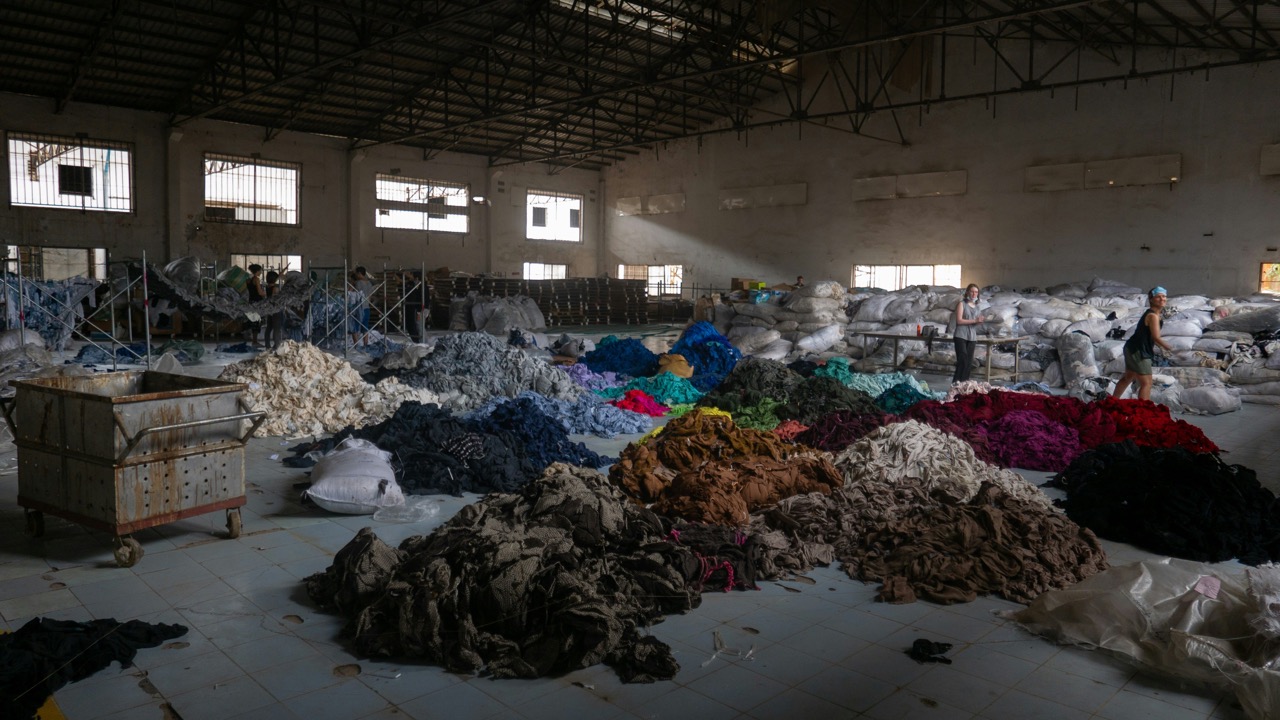
Tremendous amounts of resources are used not only in the production of textiles and electronics, but in managing their disposal as well. Upsplash+
The San Francisco Bay Area is often celebrated as the global hub of innovation, yet we are still tethered to a primitive “take-make-dispose” economy. With over 7.7 million of us living here, we have the collective power to move beyond being just “consumers” and become “stewards”.
The transition from a linear “take-make-dispose” system to a circular model is more than an environmental necessity; it is a profound economic opportunity. Textiles and electronics represent substantial losses when discarded, as each item thrown away reflects a missed chance to reclaim valuable fibers and metals. A circular approach conserves these resources while creating new revenue streams through resale, refurbishment, and materials recovery.
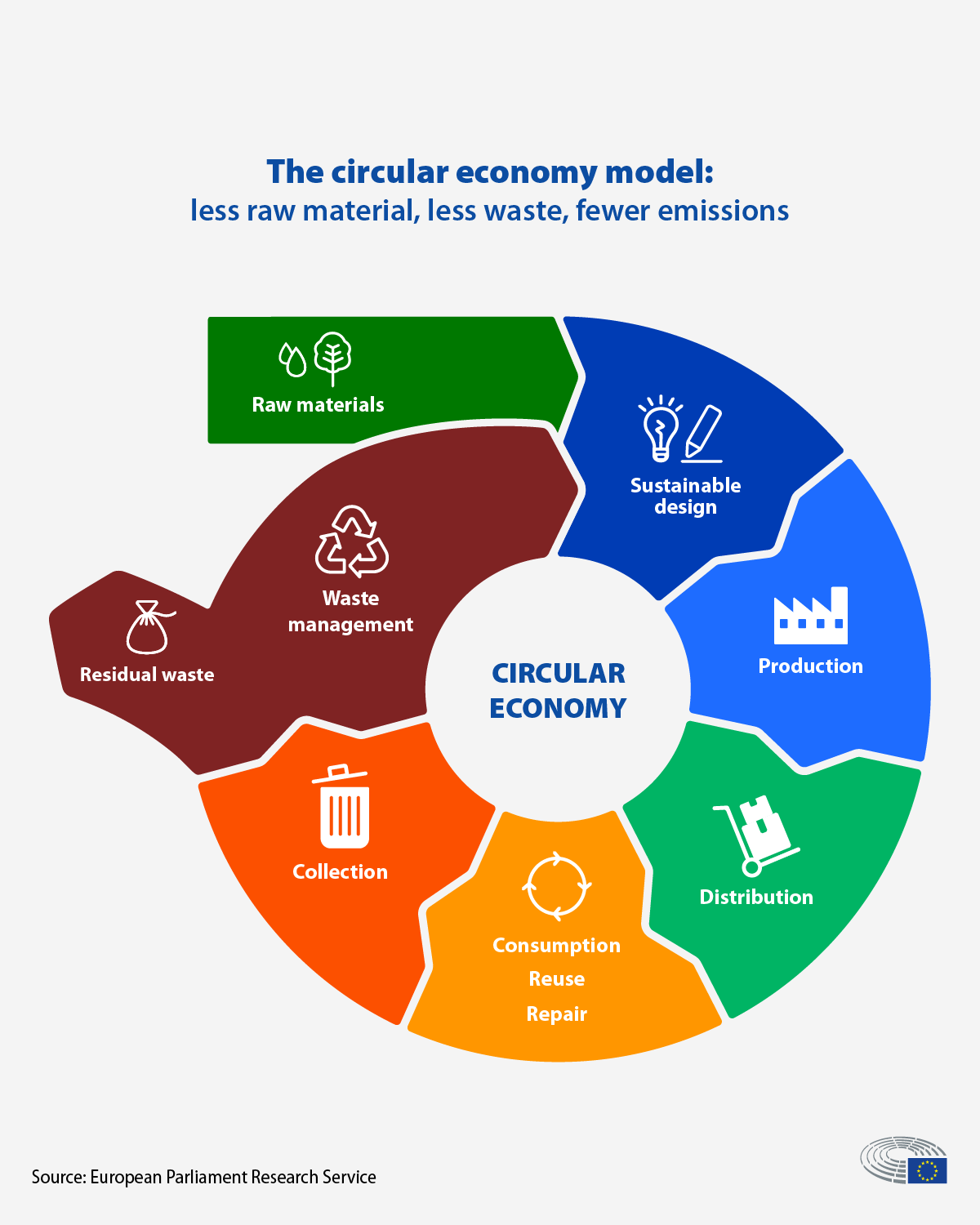
Moving from a linear model to a circular economy shifts the focus from disposal to a continuous loop of sustainable design, reuse, and recycling. European Union, 2023
Becoming stewards requires a fundamental shift in how responsibility for materials is understood across their entire lifecycle. Stewardship extends beyond mindful purchasing to include intentional decisions about reuse, repair, and proper end-of-life management. It reframes discarded goods not as waste, but as assets that retain value when captured through the right systems. In a region defined by technological leadership and environmental ambition, stewardship represents the opportunity to align innovation with accountability, ensuring materials circulating through the Bay Area economy are managed with long-term ecological and economic outcomes in mind.
The scale of local consumption is immense. According to the California Department of Resources Recycling and Recovery, Californians throw away approximately 1.2 million tons of textiles annually, with the Bay Area contributing significantly to this waste stream (CalRecycle, 2024). Robust circular systems not only reduce the environmental impact of our consumption but can also strengthen the local economy through the creation of green jobs in collection, repair, and advanced recycling.
EkoLinq is at the forefront of this local movement, creating a tangible solution that bridges the gap between consumers and a sustainable circular economy. Operating on the core principle of reusing first and recycling second, we prioritize extending the life of products before breaking them down for parts. By providing a streamlined, responsible outlet for clothing and textiles, EkoLinq works to ensure that these products are diverted from landfills and kept within the loop of utility. Through these local efforts, we can reduce environmental liabilities, meet rising consumer expectations for transparency, and protect the unique ecosystems of Northern California.
Reducing waste happens one pickup at a time.
Let us help you do your part in reducing consumer waste.